Industrial Interior Design: A Complete Guide (2025)
Design
Industrial
Guide
Construction
Explore industrial interior design that works. Learn how to balance form, function, and cost in renovation projects built to perform and last.

You walk into an industrial facility, and while it’s clean, functional, and efficient, it feels cold, disconnected, and uninspired. Industrial interior design allows you to shift your work environment from just a place where work gets done to a reflection of how your business operates, how your people feel, and how your clients perceive you.
At InDecca, we believe even the toughest spaces deserve intentional design. So if you're still treating interiors like an afterthought, it’s time to rethink what’s possible. Your space should work harder and look better doing it.
What Is Industrial Interior Design?
Industrial interior design is a style rooted in functionality, durability, and raw beauty. Born from the adaptive reuse of old factories and warehouses, this design emphasizes utilitarian materials, exposed structural elements, and minimal ornamentation.
It’s a style that embraces what’s raw, durable, and utilitarian: exposed ductwork, concrete floors, steel frames, and finishes that look as good as new even after years of wear. Beyond aesthetics, industrial design is deeply functional, making it a smart choice for spaces where operations matter just as much as appearance.
The right industrial interior looks sharp and supports workflow, improves safety, and gives teams a place they’re proud to walk into. It’s also easier to clean, maintain, and adapt over time, especially as your business grows.
Why Industrial Interior Design Isn’t Like Designing an Office (and That’s a Good Thing)
Designing industrial spaces isn’t about slapping on a coat of paint or picking trendy fixtures. It’s about precision, performance, and making the environment do more for your people and your process.
Industrial interior design must meet heavier demands than typical office or retail design. We’re talking high-traffic areas, heavy equipment, variable temperatures, specialized lighting, and strict code requirements. But that doesn’t mean it has to feel cold or utilitarian. The uniqueness comes from solving real operational problems with smart design decisions.
Characteristics of Industrial Interior Design

Industrial interior design creates environments that are efficient, durable, and true to their function. When done right, it supports the flow of people, processes, and equipment without sacrificing comfort or identity. Here’s what defines the style and what to keep in mind when designing with it:
Exposed Structural Elements
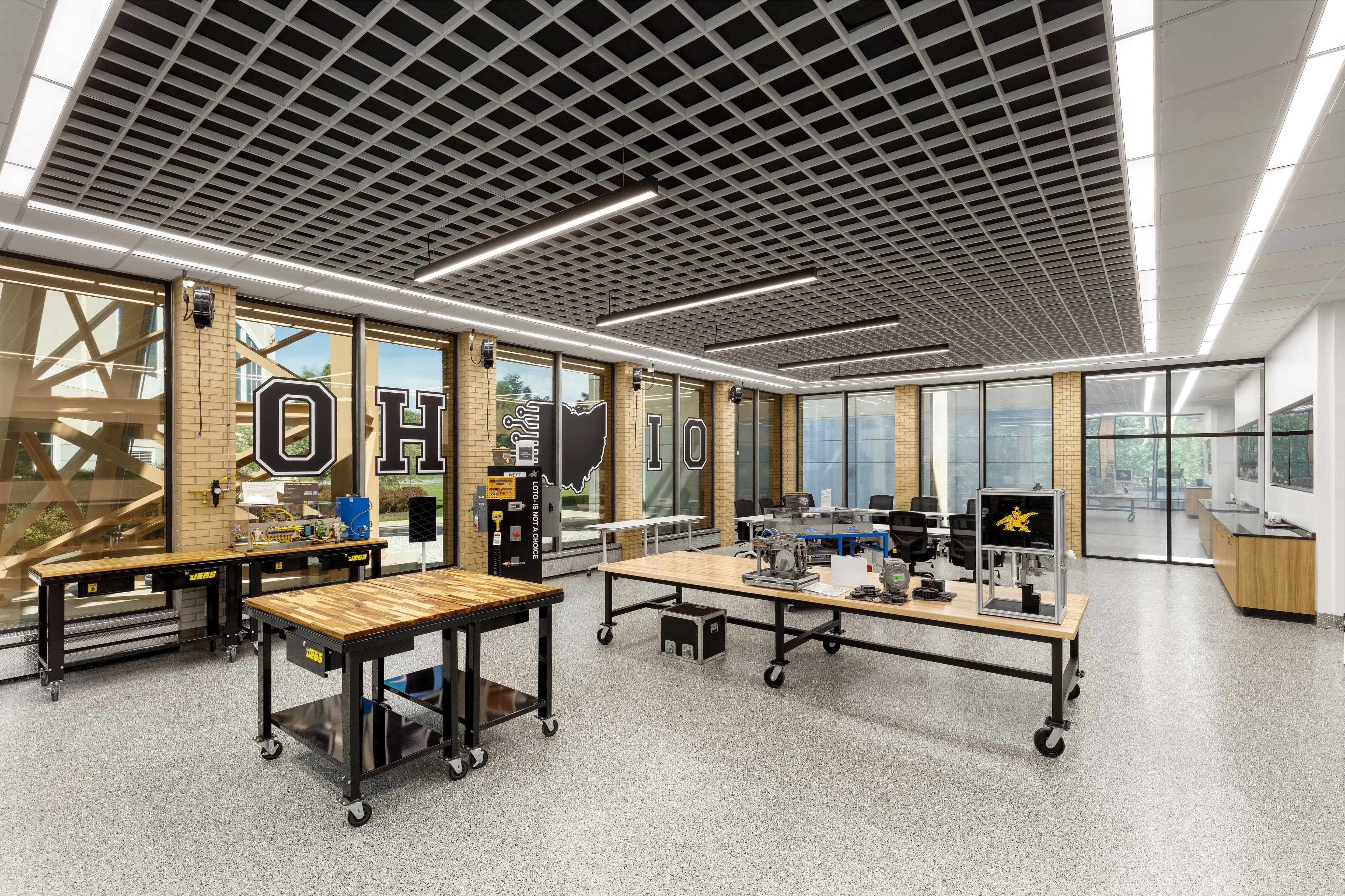
Exposed beams, ductwork, concrete, and piping give industrial interiors their raw and honest appeal. But it’s not just about looks. Designers must consider acoustics, insulation, and code compliance when leaving systems visible. It’s about balancing visual transparency with performance.
Raw and Natural Materials
Industrial spaces lean on steel, reclaimed wood, concrete, and brick, not just for aesthetics but for their rugged durability. The design challenge? Choosing materials that hold up under heavy use and meet safety, cleanability, and maintenance standards.
Neutral and Earthy Color Palette
Grays, charcoals, warm browns, and black create a grounded, professional atmosphere. But don’t let the palette go flat. Smart lighting, texture, and occasional pops of brand color can help balance utility with personality and create an environment that's inspiring.
Minimalist and Functional Furniture
In these environments, furniture needs to work hard. That means mobile, modular pieces that can take a beating. Think ergonomic where it matters, especially in break rooms, offices, and collaborative spaces, but always prioritize efficiency and flow.
Open Spaces and High Ceilings
Industrial buildings often come with volume and flexibility built in. Use it to your advantage. Plan for clear sightlines, logical circulation, and room to scale, whether that’s adding racking systems or adapting to future automation.
5 Reasons Your Commercial Project Needs Industrial Interior Design

Every space you build or renovate sends a message about how a company operates, treats its people, and invests in its future. And in industrial environments, where functionality is king, good design matters. A lot. Here’s why:
Design should work as hard as your team.
A well-designed industrial space is easier to work in. Thoughtful layout planning reduces wasted movement, streamlines operations, and supports workflows from shipping docks to back offices. It’s a productivity tool in steel and concrete form.
Good design supports workplace safety and compliance.
Design plays a crucial role in meeting OSHA standards by creating clear egress paths and minimizing trip and fire hazards. Lighting, materials, and wayfinding aren’t just aesthetic decisions; they’re risk mitigation strategies. The right design reduces injuries and improves oversight.
Comfort isn’t a luxury: it’s actually a productivity tool.
Industrial shouldn’t mean uncomfortable. Integrating natural light, acoustic treatments, climate control, and ergonomic break spaces helps teams feel valued, focused, and supported. When people feel better, they work better.
It future-proofs your facility.
Commercial and industrial needs evolve, whether that’s scaling production, adding automation, or shifting layout for new functions. Smart design anticipates growth. Open floor plans, modular furnishings, and flexible infrastructure help companies pivot faster, with less disruption.
Design reinforces your brand identity and culture.
Yes, even in warehouses. A branded, intentional interior shows pride of ownership, professionalism, and clarity of mission. Whether you’re hosting clients, hiring talent, or leading tours, office design leaves an impression. It tells people, “We take this seriously.”
Industrial Interior Design: Frequently Asked Questions
What is an industrial interior designer?
An industrial interior designer specializes in creating functional, efficient, and aesthetically cohesive environments for industrial spaces such as warehouses, factories, and production facilities. They combine elements of architecture, engineering, and design to optimize layouts, integrate durable materials, and ensure the space supports safety, workflow, and branding.
What is the 70/30 rule in interior design?
The 70/30 rule in interior design refers to a balanced approach where 70% of the design adheres to a primary style, such as industrial. In contrast, 30% introduces contrast through color, texture, or accent elements. This rule keeps a space grounded in a core aesthetic without feeling too rigid or monotonous.
Is industrial interior design expensive?
Industrial interior design can be cost-effective compared to traditional styles. Its use of exposed structural elements, raw materials, and minimal finishes often reduce the need for costly decorative layers. However, costs rise depending on custom features, lighting upgrades, or specialized safety and compliance requirements.
Is industrial style still in 2025?
Yes, industrial style remains highly relevant in 2025, especially in commercial and mixed-use spaces. Its blend of function, durability, and aesthetic authenticity continues to appeal to businesses looking for timeless design, easy maintenance, and flexible layouts that support modern operations.
Build Your Dream Industrial Space With InDecca Design and Construction

Ready to rethink what industrial interior design can do for your facility? We bring together expert construction knowledge and thoughtful design strategy to create spaces that are functional, durable, and aligned with your business goals. Whether you're renovating a warehouse, building a new production facility, or upgrading a logistics hub, our team delivers interior environments that work as hard as you do. Let’s create your perfect space.
Delaney Megahan
Marketing Manager